
5 Levels of Leadership by John Maxwell

5 levels of Leadership: this article explains the 5 Levels of Leadership, developed by John Maxwell in a practical way. Highlights of this article: a background of these levels, concluding with the cumulative aspect. After reading it, you will understand the basics of this leadership philosophy. Enjoy reading!
Background 5 Levels of Leadership
No matter if we’re talking about a business man, a football trainer or a teacher; the thing they have in common is that they are leaders. But at what level of leadership are they, how do they treat their employees, what do they think about results, deadlines and so on?
Every leader operates at his / her own level. According to John Maxwell, there are five levels. John Maxwell is a well-known American author of mainly leadership books.

In his book The 5 Levels of Leadership, he describes 5 leadership levels that eventually lead to a phase of maturity. With this book, he wants to help leaders understand and increase their effectiveness.
What are the John Maxwell 5 levels of leadership?
The first level is the starting point of leadership. For each level, John Maxwell explains how the respective leader can be identified and what that leader can do to grow to the next, higher level. The leadership level can vary per person and even has to do with the type of organisation someone works in and the personal development leaders go through.
The levels start with insight into personal relationships and the connections with the results that are being achieved. From there, it continues to the level at which employees believe in their leader’s vision.
A result of that is that leaders will properly train their successors. It ends when the leader is perceived as an example by the people around them.
According to Maxwell, after every level there is always the possibility to grow to the level above it.
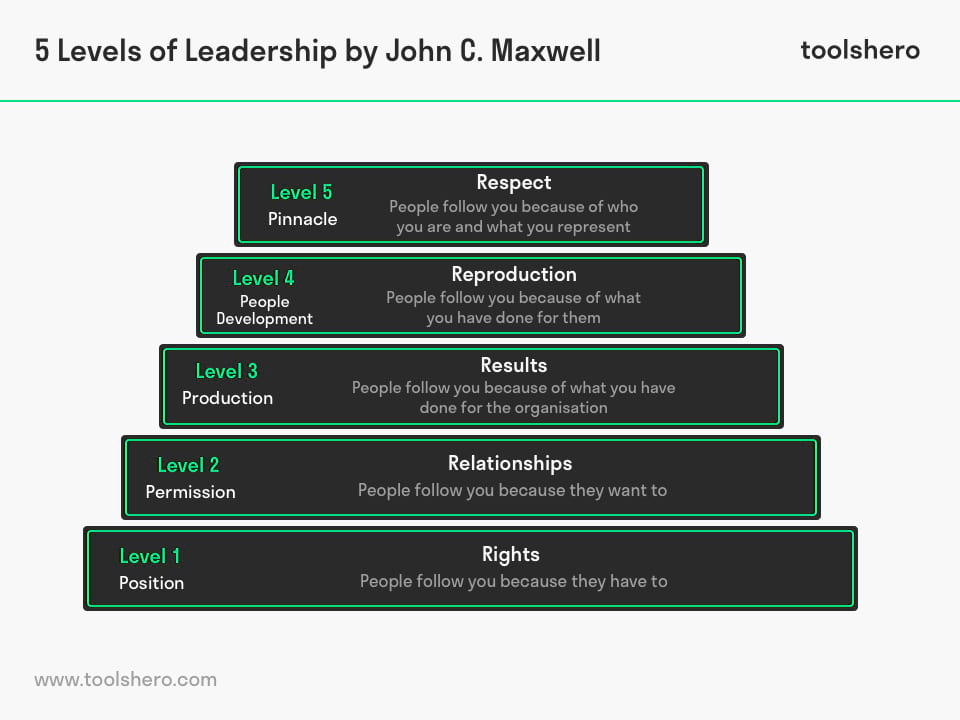
Figure 1 – 5 Levels of Leadership by Maxwell. Also read our other articles on this topic.
Level 1 Position
This is the starting point of the leadership journey. It is the level at which the leader has achieved the right to lead in an organisation without any difficulty. Anyone can be appointed to this position. For that reason, it tells you nothing about the person’s leadership qualities.
At this level, the leader is not or barely able to influence others and he or she uses his job title to get things done. John Maxwell argues that the expression, ‘it is lonely at the top’ is typical for this level of leadership; employees do not see the leader as someone they can trust.
Let alone someone to discuss things with. Employees who report to a leader like that are generally unmotivated, prefer to avoid him or her and even consider changing jobs.
This level is common in growing organisations. Departments are getting larger and that means an increased need for managers. Usually, one of the employees is given the newly awarded status of leader. Because he or she has little or no experience, it is only about his status and not about who he or she is or how he handles his employees.
Only when this new leader realises that there is more to leadership, will he be able to grow to the next level. This level is therefore a fine starting point to experience and learn the ropes of leadership.
People who work on themselves to reach the first level of leadership should consider the following issues and activities:
- Focus on developing emotional intelligence capabilities
- Learn what situational leadership is and how it can be practiced. It is important that you can adapt to the different needs of different employees
- Attempt to collaborate with employees
- Be empathetic with employees
- Learning to communicate appreciation and recognition to employees
- Ensuring effective team communication to complete tasks successfully
- Practice adopting an accepting attitude to increase team motivation
- Be approachable
- Learn as many relevant other management skills as possible
Leadership Masterclass – Insights, Models and Application
Level 2 Permission
This leadership level is about the human relationships that the leader has built up around her or him. It is like she or he is given ‘permission’ to act as leader; he is a trustworthy individual and his or her employees tend to agree with the decisions he or she makes. Because he or she has a good relationship with them, the leader realises that it becomes easier for employees to make extra effort.
Part of their motivation comes from themselves, but it is also a result of their leader believing in them. Vice versa, the employees believe in their leader and the goals he or she strives for. Good relationships strengthen the cooperation and increase loyalty and mutual trust.
A leader at this level would do well to show genuine interest in his colleagues and employees and get to know them better personally.
Colleagues and employees have a home life, health issues, personal traits and hobbies that definitely deserve attention. It is also wise to compliment colleagues and employees and bring out the best in them.
The building of a good relationship, one based on mutual respect, leads to a pleasant working atmosphere and team spirit. However, it does not necessarily always leads to positive results. That requires growing towards leadership level 3.
At this level, it’s all about building good relationships. People who are working to reach this level should consider the following:
- Always keep learning and actively ask for constructive feedback
- Support team members
- Focus on clearly communicating the mission and vision
- Listento employees and understand their needs
- Discuss the most important KPIs with employees
- Treat all employees equally
- Consider the effect of all your decisions
- Hold people accountable for mistakes
Level 3 Production
It is about the measurable results that have been achieved under the leader’s leadership. What has the leader meant to the company.
The fact that this level comes after building good interpersonal relationships, has to do with the fact that colleagues and employees are vital to achieving positive results.
Only when a team can take steps together, believe in one another and trust each other, will it be possible to achieve proper production. When employees are only told to work hard without any show if interest or empathy towards them from the leader, there is the risk that they will burn out.
The leaders at this level use their good relationships to to make their vision reality. As such, it is important that a leader makes clear to everyone in the organisation what his vision is, so everyone can follow the same course.
This leader is much loved within his team. But that is also where a danger lies. If this leader gets another position within the organisation, it is likely that the team will disintegrate. After all, they are dependent on the guidance they used to receive from their leader.
To avoid leaving the team as a ship adrift in a situation like that, it is possible for the leader to grow to the fourth level of leadership.
Leaders at this level consistently produce results and have a significant impact on the organization. Developing leadership skills at this level includes:
- Study servant leadership and incorporating it into one’s own leadership style
- Encourage employees to share input on decisions
- Listen and give directions
- Improve communication skills to make connections
- Develop a mentoring program
- Delegate
Level 4 People development
At this management level, it is about the development and stimulating of employees. It is essential for a growing organisation to have leaders at this fourth level.
This leader thinks it is important to train his employees. That is why he delegates work to them. In order to reach the pinnacle, delegating work is continued.
By delegating, he or she gives them confidence and empowers them to develop themselves. This confidence has to be genuine and communicated clearly to the employee.
According to John Maxwell, the level 4 leader spends about 80% of his or her time on coaching colleagues and employees, and only 20% on his own productivity. In contrast to level 3 leadership, it means letting go. The focus on results is of secondary importance.
The main challenge for leaders at this level is to put the growth of others first, above their own interests. The more leaders with the right qualities, the better this will be for the organisation’s mission and vision.
The more new leaders are trained, the more this leads to productive teams. Furthermore, these newly trained employees will appreciate what the leader has done for them personally. Some of those ‘mentor relationships’ are likely to last a lifetime.
Leaders at this level should ensure the following:
- Be consistent, approachable and honest
- Recommend competent employees for promotion
- Be honest in all decision making
- Clearly communicate expectations for employee roles and functions
- Be ready for everyone
- Keep developing your own personal and communication skills
- Be a mentor to everyone
Level 5 Pinnacle
The leader at this level has reached the top of what is possible. His or her status is based on a foundation of respect. His employees and colleagues appreciate the leader in see an example in him.
This is about leaders who remain in the employees’ thoughts even after they leave, making them live on as legends. From level 4, they will also leave behind new leaders in the company, which will ensure a constant flow of new generations of leaders.
The use of this type of leaders also creates level 5 organisations, who are (globally) successful and whose founders are still famous.
Examples of this are the brewer Heineken and the technology company Philips that became successful through research and innovation.
The founders themselves were typical level 5 leaders, who left behind a positive reputation through their dedication.
Leaders at this level:
- Encourage new talent and productive people
- Let team members make their own independent decisions as much as possible
- Supervise employees who develop innovative products and achieve good results
- Demonstrate integrity and keep promises
- Improve a company’s reputation
- Contribute to the development of success-centric environments
5 Levels of Leadership: Cumulative
Growth from one level to the next happens slowly but steadily. It is however important to start at the first level; from here leaders can develop and improve, which enables them to take the step to the next level. All levels are built on top of each other and therefore cumulative.
A leader will still use the skills he had at level 2 after he reaches level 3. Only when he or she is effective enough at the 2nd level, can he take the step to the 3rd level. This way, no knowledge or experience is lost and can the leader continue to improve himself.

Now it is your turn
What do you think? How could you apply the 5 levels of leadership in your working environment? Do you recognize the practical explanation or do you have more suggestions? What are your success factors for good leadership?
Share your experience and knowledge in the comments box below.
More information
- Karve, S. (2023). Leadership Masterclass – Insights, Models and Application. Retrieved 07/02/2024 from Udemy.
- Maxwell, J. C. (2013). The 5 Levels of Leadership: Proven Steps to Maximize Your Potential. Center Street; Reprint edition.
- Maxwell, J. C. (2002). Leadership 101: What every leader needs to know. Thomas Nelson Inc.
- Maxwell, J. C. (1993). Developing the leader within you. Thomas Nelson Inc.
How to cite this article:
Mulder, P. (2017). 5 Levels of Leadership (Maxwell). Retrieved [insert date] from Toolshero: https://www.toolshero.com/leadership/5-levels-of-leadership/
Original publication date: 03/14/2017 | Last update: 02/07/2024
Add a link to this page on your website:
<a href=”https://www.toolshero.com/leadership/5-levels-of-leadership/”>Toolshero: 5 levels of Leadership (Maxwell)</a>

Related ARTICLES

Seven Transformations of Leadership

Lead by Example: the Basics and Meaning

John Maxwell biography, quotes and books


Personal Leadership Philosophy









6 responses to “5 Levels of Leadership by John Maxwell”
Thanks for this 🙂 It is a really good summary on Johns teaching
Great teaching 🙂
you are very powerful i like too much what you wrote about level of leadership may god help’us
This helped me to understand the steps in such a quicker way than John Maxwell’s book. As good as quantity reading may be, sometimes a more simplified and concise explanation is welcomed. Thank you.
Love the article and the approach but not sure why all the leaders are always referred to as ‘he’ and ‘him’
Simple and clear. Thanks !