
GROW Coaching Model explained

GROW Coaching Model: this article provides a practical explanation of the GROW Coaching Model. Next to what it is (and its origin), the article highlights how to use it, the different steps, the basis questions and the way you can use this during coaching, including tips and a GROW Coaching Model template. Enjoy reading!
What is the GROW Coaching Model?
The GROW Coaching Model helps one start coaching and mentoring in a structured and efficient way to improve performance. Based on a four-step plan, a coaching conversation can be conducted with another person.
The coaching framework mainly shows which questions can be asked and how the conversation should be completed, such that it yields clear results. The conversation partner actively clarifies the problem and suggests solutions. Consequently, the result will more easily lead to improvement and intrinsic motivation will be nurtured.

Introduction
The GROW Coaching Model includes all elements that are in the nature of a problem. For a problem to exist in coaching, there must be something that the client wants to achieve (goal) and an obstacle that prevents him or her from achieving the goal (obstacles). By using this coaching model, a problem is automatically divided into these parts.
This makes the model very suitable to be applied to any client problem. GROW is used for technical problems, process problems, interpersonal questions, strategy problems and many more. The model can also be used collectively, for example by a group of members working together on the same problem.
Origin
The GROW Coaching Model was originally developed in the 1980s by coaching executives Sir John Whitmore, Graham Alexander and Alan Fine. Sir John Whitmore is well known for his book Coaching for Performance.
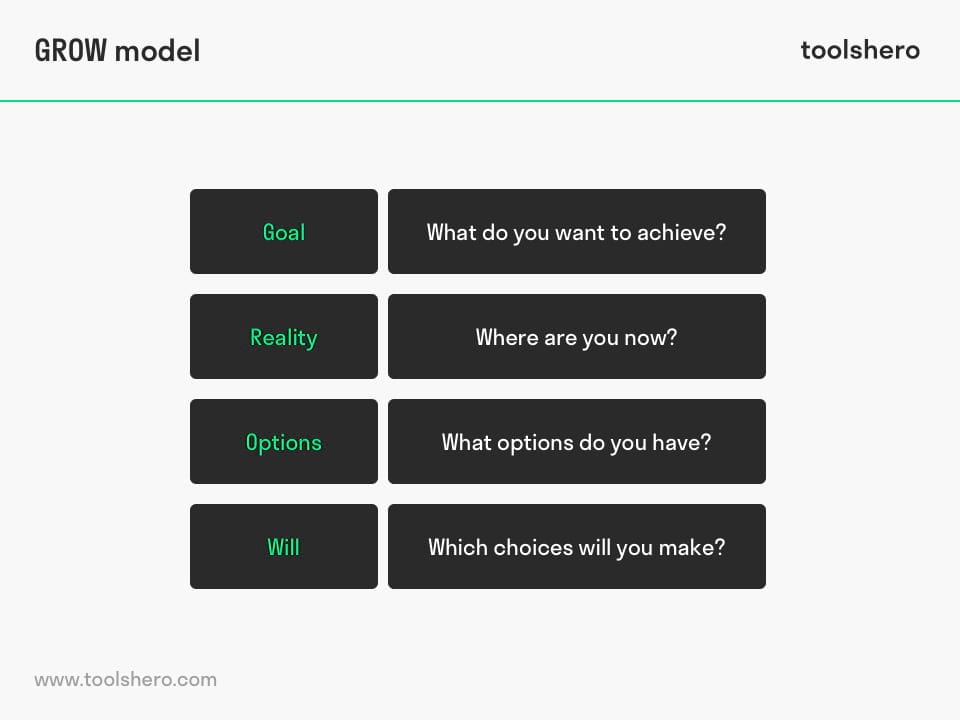
figure 1 – the elements of the GROW Coaching model
How to use the GROW Coaching Model?
This coaching model assumes that the life coach isn’t an expert at his client’s situation. The coach is considered to be an objective facilitator, who helps the client to select the best options, without offering advice or direction.
If this model is used within teams, other dynamics are at play: As a leader, you probably have some expertise and knowledge. It’s your job to guide your organisation through the options and to prevent harmful ones.
Different Steps in the GROW Coaching Model including the basic questions
The GROW Coaching Model is a four-step plan. GROW is an acronym for Goal, Reality, Options, Obstacles and Will/ Way Forward.
1. Where are you going? (Goal / Objective)
The goal must be set first, both for the longer term (the theme or themes the coachee inputs for the coaching process) and for the meeting itself (what should the coaching session yield concretely?).
It’s important that the goal meets the SMART requirements: Specific, Measurable, Achievable, Relevant and Time-bound.
GROW Coaching Model: the questions to discover the objective
- What do you wish to achieve (final goal and objective)?
- When do you want to achieve it?
- How do you know when you’ve reached your goal?
- What situation would be satisfactory?
- Is it measurable?
2. Where are you now? (Reality/ Current situation)
After the goal has been determined, step two explores the current situation. In this stage, it’s important to comprehend and refine the conversation theme. Here, the coach’s role is to encourage the coachee to engage in self-evaluation and analyse concrete examples. It’s important to hold onto the central theme and timely close irrelevant segues. By means of specific feedback, the coach is able to contribute to clarifying the core problem.
GROW Coaching Model: the questions to explore the situation
- What is happening now?
- Who are involved?
- What have you achieved so far?
- Which results has this yielded?
- What are the most important obstacles for you?
3. Exploring options
The goal of step three of the GROW Coaching Model is to create ideas that can contribute to solving the problem. Free brainstorming is an important component in this step. The coach encourages the creative thought process in the coachee, categorises the output (for instance by writing things down) and suggests ideas if necessary.
Example questions for coming up with options
- What options do you have?
- What would a list of your possible actions look like?
- What else could you do?
- What are the pros and cons of the various options?
- How easy or difficult are these options for you?
- Do the various options have any undesired side effects?
4. Choosing from options + motivation + prepared (Will)
The fourth and final step is arriving at a completing conclusion. What option will the coachee choose that he/ she will take every effort for? This step is concluded with a clear action plan about who will do what within what time period.
Example questions for creating an action plan:
- What will you do in concrete terms?
- When will you do this?
- Does this meet your goal?
- What obstacles do you think you will encounter?
- How will you overcome these?
- Who should know?
- Do you need help?
- How will you get it?
Coaching using the GROW Coaching Model
Below you find an example of a scenario in which the GROW Coaching Model is applied for coaching and mentoring purposes.
Jasmine engages a coach to help her achieve her goal. Her goal is to reduce her weight from 85kg to 60kg within three months.
In addition, her goal is to stay at this weight after the three months. As this is a very personal goal for Jasmine, there is a good chance that she will work hard to achieve it.
An approach following the GROW Coaching Model is effective in this situation.
The reality section of the model requires Jasmine to acknowledge her weight as it is now. The coach then starts a conversation with Jasmine and asks various awareness questions. In this way, possible obstacles are identified. Examples of questions the coach can ask here are:
- Have you succeeded in losing weight before? What made the difference for you then? What did you learn from the experience?
- What are the differences between situations where you lost weight and situations where you gained it back?
- What needs to change for you to make sure the weight comes off and stays off?
Asking the right questions by the coaches and honestly answering them by the client allows for new information to be discovered about what works and what doesn’t. It then becomes possible to use multiple strategies.
It then becomes possible to develop multiple strategies that avoid the identified obstacles as much as possible. Once the client is comfortable with a strategy, the way forward can be established through action points and goals. An example of this is preparing a healthy meal or buying fruit and vegetables.
Applicability of the GROW Coaching Model
You can already start working with this coaching model based on the information above. Important points are: ask yourself the questions, explore the reality and your options, draw up an action plan and follow up on yourself.
The coach often uses coaching skills such as active listening, creating report and the balance with leadership and providing feedback.
As a result, the GROW method is truly effective when it’s used by a professional coach. He will also choose the applicable method per client depending on the individual and the coaching and mentoring question.
GROW Coaching Model worksheet and template
Use this GROW Coaching Model template to use during a coaching session or its preparation. Available as an editable worksheet / template.
Download the GROW Coaching Model worksheet
This worksheet is exclusively for our paying Toolshero members. Click here to see if a membership is something for you!
Now it’s your turn
What do you think? Are you familiar with the explanation of the GROW Coaching Model or do you have anything to add? When do you think the coaching model is effective? What do you believe are success factors that contribute to the practical application of this coaching and mentoring theory?
Share your experience and knowledge in the comments box below.
More information
- Whitmore, J. (2010, 2002). Coaching for performance: Growing human potential and purpose-the principles and practice of coaching and leadership. Nicholas Brealey.
- Whitmore, J., & Einzig, H. (2006). Transpersonal coaching. J. Passmore Excellence in coaching: The industry guide. London, Kogan Page. pp 119-133.
- Zeus, P., & Skiffington, S. (2002). The coaching at work toolkit. A Complete Guide to Techniques and Practices. McGraw-Hill Companies.
How to cite this article:
Sari, J. (2018). GROW Coaching Model. Retrieved [insert date] from Toolshero: https://www.toolshero.com/management/grow-coaching-model/
Published on: 01/01/2018 | Last update: 04/17/2023
Add a link to this page on your website:
<a href=”https://www.toolshero.com/management/grow-coaching-model/”>Toolshero: GROW Coaching Model</a>

Jessie Sari
Jessie Sari is a content writer at ToolsHero. Jessie studies Trade Management in Asia at the Hogeschool van Rotterdam. As part of her education, she focuses on building fundamental skills, including marketing, importing and exporting products and services in Asia, economy, finance, management, consultancy and project management.

Related ARTICLES

Core Quality Quadrant Model explained

Reflective Learning Approach: reflect and learn

What Is Coaching And Is It For You?

John Driscoll Model of Reflection

Cognitive Restructuring: Worksheet and Theory








One response to “GROW Coaching Model explained”
Love the GROW coaching model but use Way forward instead of Will.