
GAP Analysis
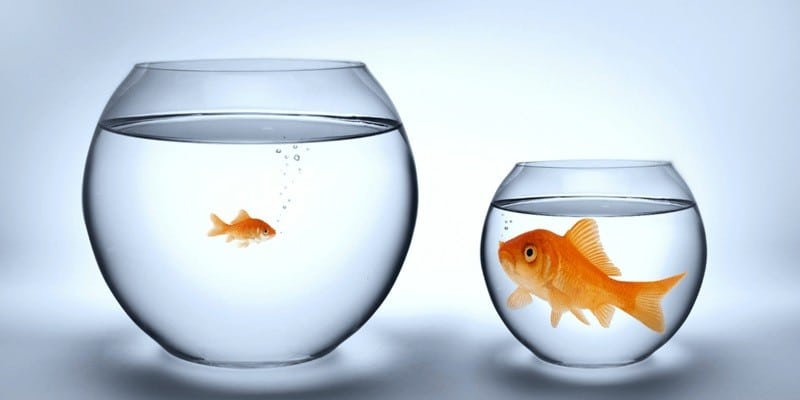
GAP Analysis: this article describes the GAP Analysis in a practical way. After reading you will understand the basics of this powerful type of project management and strategic tool.
What is a GAP Analysis?
It is vital for organisations to have the right objectives and achieve them within the allotted time. A gap occurs when it is not possible to (fully) complete an objective before the deadline. When that happens, the end result does not match the objective that had been set earlier. The GAP Analysis is a good and useful tool to counteract such a gap.
The GAP Analysis is often used in commercial organisations, but can also be a valuable tool for financial service providers such as banks and insurance companies.

Identity versus image
The GAP Analysis compares an organisation’s current situation to the desired situation. It analyses the GAP between identity (how an organisation wants to be perceived) and image (how the organisation is perceived).
It helps organisations make the right choices, improving the image they have to different audiences and aligning it to how the organisation wants to be perceived. The result allows an organisation to improve itself and remove potential gaps between identity and image.
When audiences have a certain image of an organisation that is similar to how that organisation wants to be perceived, this will improve customer relations and customer loyalty in the long term.
Four parts
In order for a proper GAP Analysis to work, the current and desired identity need to be charted using an internal Strengths and Weaknesses Analysis.
The following four elements are relevant when considering an organisation’s identity, which also need to be taken into account in the GAP Analysis:
- Desired identity
- Current identity
- Physical identity
- Current image
By comparing these four aspects, an organisation can find out where the differences lie between the desired identity and the actual result. That way, the result can be improved.
GAP Analysis example
Imagine that an organisation really wants to project the following values: Trustworthy, hip and current, advisory, clear communication, distinctive, high quality and service-oriented. Research shows that the values trustworthy, clear communication and service-oriented score less than 30% with audiences. That means there is a gap between identity and image.
The GAP Analysis helps to determine what factors are responsible for this. That way, the organisation will have a clear idea of what focus areas they should work on to regain the customers’ trust. The four elements are explained in more detail below to better understand this method.
1. Desired identity
An organisation’s desired identity is completely focused on the future. This is the part in which one has to find out where an organisation wants to go and how they want to present themselves to the outside world (customers, suppliers, partnerships, investors, competitors etc.) This can be done using the following four points:
- What is the organisation’s mission, core business, what does the organisation stand for and who are its customers?
- What is the organisation’s vision and what objectives will need to be achieved in the long, medium and short term?
- What are the organisation’s core competencies, how can they identify themselves and how do they want to serve their customers?
- What are the organisation’s values, its ideas (i.e. Corporate Social Responsibility), and how do they want to present these to the public?
2. Current identity
The current identity is the actual identity and is determined by all employees. They represent the organisation and communicate to all its audiences.
An indifferent customer service employee can easily ruin things for the friendly and solution-oriented receptionist. This can be devastating to a company that wants to present itself as helpful and service-oriented.
The following questions can be useful:
- What are the organisation’s strengths and weaknesses (internal SWOT analysis)?
- What does an organisation need to do in order to serve its audiences as much as possible?
- What associations do audiences have with the organisation?
The current identity can differ depending on the employee, which means it can be presented and communicated to audiences in different ways. Since every employee experiences the organisation differently, this relates to how the identity is perceived.
The current identity can be determined by holding an internal survey about the core values an organisation has according to its employees.
3. Physical identity
The desired identity (as described in ambitious goals) and the current identity (that show the actual results), both lead to the physical identity. Physical identity is about the observable and sensory elements that are linked to an organisation or brand.
To illustrate, here are examples for each sense:
- Seeing: everything that can be seen, including logo, corporate identity, ads and colours that allow people to recognise an organisation. I.e. the combination of blue and yellow that people associate with Ikea.
- Hearing: think of tunes, melodies or recognisable sounds, like a whistled tune.
- Tasting: a particular organisation can be strongly associated with certain a flavour, like Nutricia/chocolate milk, Heineken/beer and Lays/chips.
- Smelling: it is also possible for an organisation to be strongly associated with a smell that audiences relate to a product or brand, like Chanel/Chanel No. 5.
- Feeling: this relates to the emotion a brand or organisation evokes, such as the familiar feeling of KLM and the urge to do some DIY.
The physical identity therefore relates to the variety of ways in which audiences interact with an organisation or brand, including advertising. When a brand’s physical identity does not match its desired identity, it hurts the organisation or brand’s credibility; there is a gap.
4. Current image
The (current) image is shaped outside of the organisation by its audiences; they form an opinion on the organisation based on available information and experiences. This is therefore the result of combination of desired, actual and physical identity. It is a mistake to assume that an image is based solely on what consumers think.
The image is also determined by other stakeholders including partners, trade organisations, investors, competitors and governments. It takes a lot of time to build an image. The danger is that it can be destroyed very quickly.
It is wise to determine what the image is based on. The current image can be determined by having customers, business relations, consumers and other stakeholders answer (telephone) interviews and/or (online) surveys.
GAP Analysis : Points for improvement
Noticeable differences shown by the GAP Analysis can be a starting point for correcting the identity.
When a health care organisation wants to communicate being open, honest and genuine, it can be very counter-productive if a manager receives a huge bonus on top of an already substantial salary. In that case, the desired identity does not match the actual identity and image.
When dealing with such a gap, it is a good idea for an organisation to adjust its goals and consider which values it should really be focusing on. That way, a GAP Analysis provides points for improvement. The organisation can use these and perhaps even develop a new strategy or strong campaign plan.

It’s Your Turn
What do you think? How do you apply the GAP Analysis in your project or organisation? Do you recognize the practical explanation or do you have more additions? What are your success factors for comparing and aligning a current situation of an organisation to a desired situation?
Share your experience and knowledge in the comments box below.
More information
- Beane, W.E. (2013). Mind The Gap!: Analyze and Improve Perfomance. CreateSpace.
- Headley, D. E., & Choi, B. (1992). Achieving service quality through gap analysis and a basic statistical approach. Journal of Services Marketing, 6(1), 5-14.
- Winch, G., Usmani, A., & Edkins, A. (1998). Towards total project quality: a gap analysis approach. Construction Management & Economics, 16(2), 193-207.
How to cite this article:
Mulder, P. (2017). GAP Analysis. Retrieved [insert date] from ToolsHero: https://www.toolshero.com/project-management/gap-analysis/
Add a link to this page on your website:
<a href=”https://www.toolshero.com/project-management/gap-analysis/”>ToolsHero: GAP Analysis</a>
Published on: 12/07/2017 | Last update: 01/03/2022

Related ARTICLES

Influencer Marketing: Basics and Strategy explained

Design Thinking Process by Herbert Simon

Balanced Scorecard Framework and Template

Business Model Canvas (BMC) explained including template

Kevin Lane Keller biography and books