Chris Argyris biography, quotes and books

Chris Argyris - Toolshero

Chris Argyris (1923–2013) was a leading scholar and professor emeritus at Harvard in the fields of organizational learning, behavioral change, and learning in organizations. His work continues to help us better understand why teams and organizations keep making the same mistakes, why change often proceeds with difficulty in practice, and why learning only truly takes place when assumptions, routines, and behaviors are open to discussion.

In this article, you’ll discover who Chris Argyris was, what he was best known for, and why his work remains relevant to leadership, change management, and organizational development. You’ll learn more about his key ideas, such as single-loop learning, double-loop learning, and theory in use. You’ll also discover the significance of his collaboration with Donald Schön and how his insights remain applicable in organizations today.

Who was Chris Argyris? His biography

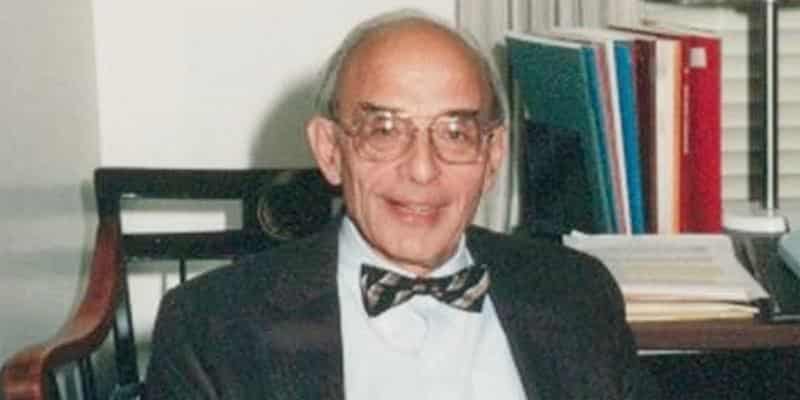
Chris Argyris was a leading scholar in the fields of organizational behavior, organizational learning, and behavioral change in organizations. He was born on July 16, 1923, in New Jersey, where he also grew up. Over the course of his career, he became an influential researcher, lecturer, and professor, having a major impact on how organizations view learning, change, leadership, and human behavior.

His academic background spanned multiple disciplines. In 1947, Chris Argyris earned his first degree in psychology from Clark University in Worcester, Massachusetts. It was there that he met Kurt Lewin, who at that time was in the process of establishing a research center for group dynamics at the Massachusetts Institute of Technology (MIT). That encounter is significant because it was precisely there that an important foundation was laid for later thinking about behavior in groups and organizations.

Two years later, in 1949, Argyris also earned a master’s degree in economics from the University of Kansas. He then earned his Ph.D. in 1951 at Cornell University in New York on the topic of organizational behavior. He did so under the supervision of William F. Whyte. This gave his work a clear direction early on: the relationship between individuals, organizational structures, and behavior in practice.

From 1951 to 1971, Chris Argyris was affiliated with Yale University in Connecticut. There, he was a professor of administrative sciences and later also chair of that department. During this period, his research focused primarily on the influence of formal organizational structures, control systems, and management on the functioning of individuals. He incorporated the insights from this phase into his books, including Personality and Organization (1957) and Integrating the Individual and the Organization (1964).

Gradually, his focus shifted. Based on his earlier research findings and the reactions to them, Chris Argyris began to focus increasingly on organizational change and the behavior that emerges in that context, particularly within top management. It was precisely this shift that proved significant. During this phase, he began to further develop many of his best-known intervention theories and methods.

Donald Schön played an important role in that theoretical development. Together, they deepened their research into learning within organizations and the way in which people and systems adapt during change. Their joint body of work evolved into what later became known as organizational learning. Within this field, they made a significant contribution with the development of the theory of single-loop learning and double-loop learning. This theory demonstrates that organizations learn not only by correcting mistakes, but also by critically examining underlying assumptions, routines, and beliefs.

Chris Argyris also collaborated with Peter Senge. Together, they developed, among other things, the inference ladder, a powerful tool that illustrates how people arrive at conclusions based on observations, assumptions, and interpretations. This model remains relevant for decision-making, communication, and perception-building within organizations.

Starting in 1971, Argyris became a professor of organizational behavior at Harvard University. There, he further expanded his work and became an influential voice in organizational development and management thought. In addition to his research, he was also known as a teacher. He gave lectures and inspired students with exercises, reflection, and practical insights. He is often cited as a teacher who inspired thinkers like Peter Senge and helped advance their thinking.

What is Chris Argyris best known for?

Chris Argyris is best known for his work on organizational learning, behavioral change, and the way people and organizations deal with mistakes, tension, and feedback. He investigated why organizations often say they want to learn and improve, while in practice, behaviors that hinder change become apparent. In doing so, he put into words a problem that is recognizable in many organizations but is not always easy to discuss.

His name is primarily associated with concepts such as single-loop learning, double-loop learning, theory in use, and action science. Through these ideas, he demonstrated that learning is more than just solving a problem or refining a process. At its core, it revolves around the question of whether people are also willing to critically examine their own assumptions, routines, and thought patterns.

That is precisely what made his work influential. Chris Argyris did not merely look at what organizations formally establish in policies, systems, or procedures. He focused primarily on what people actually do. This revealed that many organizations appear open, learning-oriented, and professional on the surface, while avoidance, control, or defensive behavior can play a significant role beneath the surface.

This established Chris Argyris as a key thinker in leadership, organizational development, and change management. His work continues to help us better understand why teams get stuck, why learning sometimes remains superficial, and why sustainable change only emerges when behaviors and beliefs are also open to discussion.

Single-loop and double-loop learning

One of Chris Argyris’s best-known contributions is the distinction between single-loop learning and double-loop learning. This theory helps us better understand how people, teams, and organizations learn from mistakes and experiences. At the same time, the model shows why many improvement efforts do solve some problems but do not always lead to real development.

In single-loop learning, a mistake is corrected without changing the underlying approach. The focus is on what went wrong and how it can be improved next time within the existing goals, rules, and assumptions. This is useful and, in many situations, logical. For example, a team that misses a deadline might plan more tightly or discuss progress more frequently. This addresses the immediate problem.

Double-loop learning takes it a step further. It not only corrects the mistake but also examines which assumptions, beliefs, or routines underlie that mistake. This requires more reflection. Instead of merely asking what went wrong, it also examines why people did what they did and what patterns emerge from that.

That difference is important. For example, an organization might notice that employees are taking little initiative. With single-loop learning, this might lead to additional training or more clearly defined goals. With double-loop learning, deeper causes are also examined, such as a culture where mistakes are punished, decisions remain stuck at the top, or employees have learned that taking risks yields little reward.

That is precisely why this theory remains relevant. Chris Argyris demonstrated that organizations only truly learn when they not only adjust their behavior but also dare to examine their way of thinking. As a result, the model helps not only with error correction but also with cultural change, leadership, and sustainable improvement.

What is “theory in use” according to Chris Argyris?

Another important concept introduced by Chris Argyris is “theory in use.” By this, he meant the difference between what people say they value and what their actual behavior reveals in practice. This may seem simple, but in organizations, this difference is often greater than expected.

Chris Argyris distinguished between espoused theory and theory in use. Espoused theory is the theory that someone articulates. These are the values, principles, and beliefs that someone says are important. Theory in use is something else. It becomes visible in actual behavior, in choices, reactions, and interactions on the job.

In concrete terms, this means that an organization may say that open communication is important, while in practice employees avoid criticism, withhold information, or fail to address tensions. In that case, openness may be the stated ideal, but actual behavior reveals a different pattern. It was precisely this tension that Chris Argyris considered important, because that is often where the real learning challenge lies.

The idea behind theory in use is simple. Anyone who wants to understand organizations must not only listen to policies, missions, or good intentions. One must also look at what people actually do in difficult situations. How do they react to mistakes, feedback, uncertainty, or dissent? That is where it becomes clear which beliefs are truly driving their actions.

That is precisely why this concept remains valuable for leadership, team development, and cultural change. It helps us look more honestly at behavior and be less quick to settle for what appears well-organized on paper. This creates greater awareness and allows an organization to work more purposefully on learning, trust, and change.

Why is Chris Argyris still relevant to organizations?

Chris Argyris is still relevant because many organizations struggle with the same problems he studied. Teams repeat mistakes. Managers say they want openness, but mainly reward control. Feedback is encouraged in theory, while criticism still feels risky in practice.

That tension is exactly where his work becomes useful. One of Argyris’ key points is that organizations do not automatically learn from experience. A mistake may be corrected, while the deeper cause remains untouched. The process looks better for a while, but the old pattern stays in place.

This happens often in daily work. A team changes a procedure after a problem, but does not discuss why no one raised the issue earlier. A manager asks for input, but reacts defensively when people are honest. The visible problem is solved. The behaviour underneath continues.

That is why concepts such as single-loop learning, double-loop learning and theory in use are still useful. They help organizations look beyond the incident itself. What assumptions guide people’s behaviour? Which routines are never questioned? What do people avoid saying when the pressure rises?

For leadership, this is especially relevant. Many leaders want trust, learning and openness. Yet their behaviour under pressure may send a different signal. Quick judgments, filtered information, postponed conversations and avoiding criticism can quietly block learning.

Argyris made that uncomfortable point very clear. The real learning challenge is not only in strategy, policy or good intentions. It is in the behaviour people show when something becomes difficult.

That makes his work valuable for organizational development, feedback culture, team learning and change management. His ideas help organizations look more honestly at what happens on the work floor: assumptions, conversations, defensive routines and patterns that either support learning or hold it back.

For organizations that take learning seriously, Argyris still offers a strong framework. Sustainable improvement starts when people adjust not only what they do, but also how they think about what they do.

Chris Argyris on Culture and Management

For those who would like to hear Chris Argyris speak for themselves, this video provides additional context for his ideas on culture, management, and behavior in organizations. In this interview excerpt, it becomes clear how he viewed assumptions, reasoning, and interactions in the workplace.

The video thus ties in well with his work on organizational learning and theory in use and provides further insight into the themes central to this article.

Subscribe to
learn more with
Toolshero

Famous quotes

  1. “Most people define learning too narrowly as mere ‘problem-solving’, so they focus on identifying and correcting errors in the external environment. Solving problems is important. But if learning is to persist, managers and employees must also look inward. The need to reflect critically on their own behaviour, identify the ways they often inadvertently contribute to the organisation’s problems, and then change how they act.”
  2. “Success in the marketplace increasingly depends on learning. Yet most people don’t know how to learn.”
  3. “Managers who are skilled communicators may also be good at covering up real problems.”
  4. “Smart people don’t learn… because they have too much invested in proving what they know and avoiding being seen as not knowing.”
  5. “In fact, people themselves are responsible for making the status quo so resistant to change. We are trapped by our own behavior.”

Publications, books and journals by Chris Argyris et al.

  • 2012. Organizational Traps: Leadership, Culture, Organizational Design. Oxford University Press.
  • 2008. Teaching Smart People How to Learn. Harvard Business Review Press.
  • 2004. Reasons and Rationalizations: The Limits to Organizational Knowledge. Oxford University Press.
  • 1999. Flawed Advice and the Management Trap: How Managers Can Know When They’re Getting Good Advice and When They’re Not. Oxford University Press.
  • 1999, 1993. On Organizational Learning. Blackwell Business.
  • 1996. Organizational learning II: Theory, method and practice. Addison Wesley.
  • 1993. Knowledge for Action: a Guide to Overcoming Barriers to Organizational Change. Jossey-Bass.
  • 1992, 1974. Theory in practice: Increasing professional effectiveness. Jossey-Bass.
  • 1990. Overcoming Organizational Defenses: Facilitating Organizational Learning. Allyn and Bacon.
  • 1985. Action Science: Concepts, Methods, and Skills for Research and Intervention. Jossey-Bass.
  • 1982. Reasoning, Learning, and Action: Individual and Organizational. Jossey-Bass.
  • 1980. Inner Contradictions of Rigorous Research. Academic Press.
  • 1978. Organizational Learning: a Theory of Action Perspective. Addison-Wesley.
  • 1978. Regulating Business: the Search for an Optimum. Institute for Contemporary Studies.
  • 1976. Increasing Leadership Effectiveness. Wiley.
  • 1974. Theory in practice: Increasing professional effectiveness. Jossey-Bass.
  • 1974. Behind the Front Page: Organizational Self-Renewal in a Metropolitan Newspaper. Jossey-Bass.
  • 1972. The Applicability of Organizational Sociology. Cambridge University Press.
  • 1971. Management and Organizational Development: the Path from XA to YB. McGraw-Hill.
  • 1970. Intervention Theory and Method: a Behavioral Science View. Addison-Wesley.
  • 1965. Organization and Innovation. R.D. Irwin.
  • 1964. Integrating the Individual and the Organization. Wiley.
  • 1962. Interpersonal Competence and Organizational Effectiveness. Dorsey Press.
  • 1957. Personality and Organization: the Conflict between System and the Individual. Harper.

How to cite this article:
Van Vliet, V. (2010). Chris Argyris. Retrieved [insert date] from Toolshero: https://www.toolshero.com/toolsheroes/chris-argyris/

Original publication date: March 2, 2010 | Last update: April 26, 2026

Add a link to this page on your website:
<a href=”https://www.toolshero.com/toolsheroes/chris-argyris/”>Toolshero: Chris Argyris</a>

Did you find this article interesting?

Your rating is more than welcome or share this article via Social media!

Average rating 4.2 / 5. Vote count: 5

No votes so far! Be the first to rate this post.

We are sorry that this post was not useful for you!

Let us improve this post!

Tell us how we can improve this post?

Vincent van Vliet
Written by:

Vincent van Vliet

Vincent van Vliet is co-founder and responsible for the content and release management. Together with the team Vincent sets the strategy and manages the content planning, go-to-market, customer experience and corporate development aspects of the company.

Tagged:

Leave a Reply