Steve Jobs: Biography, Apple, Pixar, Innovation, and Quotes
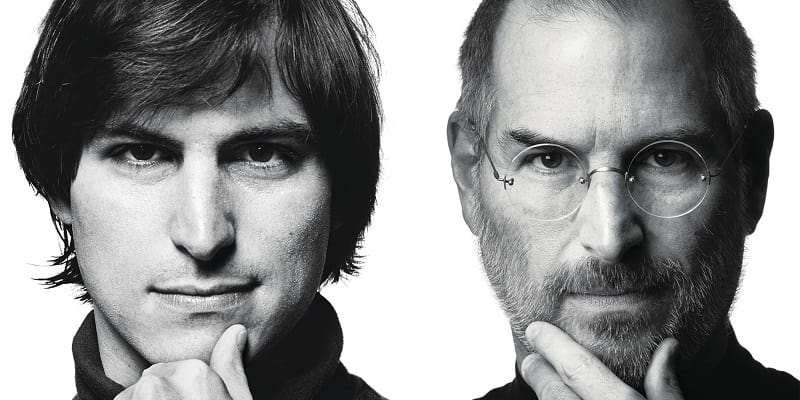
Steve Jobs (1955–2011) was the co-founder of Apple, the founder of NeXT, and a key figure behind Pixar’s growth. He became one of the most famous entrepreneurs in the technology industry. His name is most closely associated with products such as the Macintosh, iMac, iPod, iPhone, and iPad.
In this article, you’ll learn who Steve Jobs was, how his career unfolded, and why his views on design, simplicity, marketing, and innovation had such a profound impact. You’ll also discover more about his role at Apple, NeXT, and Pixar, his leadership style, his illness and passing, and famous quotes often associated with him. Enjoy reading.
Who was Steve Jobs?
Steve Jobs was born on February 24, 1955, in San Francisco. Soon after his birth, he was adopted by Paul and Clara Jobs. He grew up with them in California.
As a child, Jobs was curious and strong-willed. Technology also caught his attention early. His adoptive father showed him how to work with electronics. Radios, televisions and other devices were taken apart and put back together. For Jobs, that was not only technical. It also shaped his eye for how things were made.
After high school, Jobs went to Reed College in Portland. He left the regular program after about six months, but stayed around for a while and followed classes that interested him. One of those classes was calligraphy. Years later, he connected that experience to the typography and visual detail of the first Macintosh.
Jobs also became involved with the Homebrew Computer Club, a meeting place for people experimenting with computers. Around that period, he met Steve Wozniak. That meeting would become important. Wozniak had deep technical skill, Jobs saw the commercial potential. Together, they would later build Apple.
The Founding of Apple
In 1976, Steve Jobs, Steve Wozniak and Ronald Wayne founded Apple Computer Company. Wozniak built the first Apple computer. Jobs saw what it could become: a smaller, more accessible computer for people outside the technical hobby scene.
The two Steves had different strengths. Wozniak was the engineer. He understood the hardware and built the machine. Jobs focused more on the product, the story and the market. He wanted the computer to feel less like specialist equipment and more like something people could actually use.
The Apple II made that idea much bigger. It reached schools, hobbyists and business users, and gave Apple a real place in the young personal computer market. In 1980, Apple went public. The company quickly became one of the most talked-about technology firms of that period.
After that, growth did not go in a straight line. Some Apple products were too expensive or did not connect well enough with the market. Competition also became stronger. Inside the company, discussions grew about strategy, leadership and Jobs’ own role.
In 1984, Apple introduced the Macintosh. The computer stood out because of its graphical user interface. For Jobs, it became an important proof point for one of his strongest beliefs: technology should not only be powerful, but also understandable and pleasant to use.
Leaving Apple and the Founding of NeXT
Following internal tensions at Apple, Jobs left the company in 1985. That same year, he founded NeXT, a company that developed computers and software for educational and business applications.
NeXT was not a major commercial success, but the technology behind NeXT later became very significant. When Apple acquired NeXT in 1996, that technology became crucial to the further development of Apple’s operating systems.
Pixar and the Partnership with Disney
Pixar became another important part of Steve Jobs’ career. In 1986, he bought the Graphics Group from Lucasfilm. At that time, it was not yet the animation company most people know today.
The company later grew into Pixar Animation Studios. Its big breakthrough came with films such as Toy Story and Finding Nemo. These films showed that computer animation was not just a technical experiment. It could also tell stories that reached a large audience.
In 2006, The Walt Disney Company acquired Pixar. Through that deal, Jobs became one of Disney’s largest individual shareholders.
Pixar shows a different side of Jobs. His work was not only about computers, software and devices. It also touched design, storytelling, creativity and entertainment. That combination became an important part of how people later looked at his broader career.
Return to Apple
Apple bought NeXT in 1996. With that acquisition, Steve Jobs came back to Apple after more than ten years away from the company.
He did not return as CEO immediately. First, he came in as an adviser. In 1997, he became interim CEO, at a moment when Apple was under serious pressure.
The company had too many products, too many side projects and too little focus. For customers, it was not always clear which Mac they should buy. Inside Apple, teams were also spread across too many directions.
Jobs cut hard. Products disappeared. Projects were stopped. The product line became smaller and easier to understand.
That was one of the first visible changes after his return. Apple had to become simpler again. Fewer products. Sharper design. More attention to how people actually used the technology.
His return did not solve everything overnight, but it did change the rhythm inside Apple. The company started making clearer choices again. That became the basis for the iMac, iPod, iPhone and iPad in the years that followed.
iMac, iPod, iPhone, and iPad
After Jobs returned, Apple needed products people could understand again. The iMac, introduced in 1998, was one of the first signs of that shift. It was colourful, rounded and easier to set up than many desktop computers of that period. The design made the computer feel less like office equipment and more like something that belonged at home.
The iPod followed in 2001. Digital music already existed, but Apple made it easier to carry, organize and buy. The device itself was small and recognizable. The click wheel, the white earbuds and the connection with iTunes made the whole system feel simple for the user.
In 2007, Apple introduced the iPhone. It combined a phone, internet access, music, photos and apps in one device. The touchscreen changed how people interacted with a phone. Instead of many small buttons and menus, the screen became the main interface.
The iPad arrived in 2010. It sat somewhere between a phone and a laptop. People used it for reading, watching videos, browsing, presenting and light work. It did not replace every computer, but it made a larger touch screen normal for everyday use.
These products show why Jobs became so closely linked to Apple’s product identity. He pushed for fewer choices, stronger design and technology that felt less technical to the person using it. Not every Apple product worked perfectly, but this period made the company much more recognizable.
Leadership Style and Vision for Innovation
Steve Jobs paid unusual attention to simplicity, design and the way people experienced a product. For him, technology was not finished when it worked. It also had to make sense to the person using it.
That shaped much of Apple’s product culture. Engineers, designers and marketers were not working on separate stories. The product, the interface, the packaging and the presentation all had to feel connected.
His leadership style was intense. Jobs could be demanding, impatient and very direct. He pushed teams hard and was known for going deep into details that other executives might leave alone. That created pressure inside Apple. It also helped produce products that changed the company’s place in the market, including the Macintosh, iPod, iPhone and iPad.
For organizations and entrepreneurs, the lesson is not to copy his behaviour one to one. The useful part is the way he looked at products. What does the user notice first? Where does the product create friction? Which choices make it simpler? And why would someone want to use it again?
Those questions explain much of Apple’s identity under Jobs. Innovation was not only about adding more technology. It was about making technology feel clearer, more useful and easier to live with.
Criticism and Nuance Regarding Steve Jobs
Steve Jobs is often remembered for his vision, creativity and influence on technology. That image is only part of the story.
Several biographies describe him as demanding, direct and at times harsh. He could push people far and had little patience for work he felt was not good enough. Inside Apple, that created pressure. For some people, it brought out strong work. For others, it made the environment difficult.
There was also debate about his product choices. Jobs preferred control. Hardware, software, design, stores and user experience all had to fit together. That approach gave Apple products a recognizable feel. The iPhone, for example, did not only work as a device. It also came with a carefully managed ecosystem around apps, updates and services.
The other side was less freedom. Users and developers had fewer options than in more open systems. Apple decided more, and the customer accepted that in exchange for simplicity and consistency.
That mix makes Jobs interesting. His success did not come from creativity alone. Timing, product quality, branding, presentation and execution all played a role. His career shows what focused innovation can produce, but also how much tension can sit behind that focus.
Illness and Death
In 2003, Steve Jobs was diagnosed with a rare form of pancreatic cancer. It was a neuroendocrine tumor, which is different from the more common and more aggressive form of pancreatic cancer.
In 2004, he had surgery. The tumor was removed, but his health remained a subject of attention in the years after that. Jobs appeared thinner during public events, including Apple presentations, and this led to repeated questions about his condition.
That attention was partly personal, but also business related. Apple was still strongly connected to Jobs. Investors, journalists and users watched closely whenever he stepped back from the company or took medical leave.
On August 24, 2011, Jobs resigned as CEO of Apple. Tim Cook took over the role. Jobs remained chairman of the board.
Steve Jobs died on October 5, 2011. He was 56 years old. Apple announced the news the same day with a short public statement.
His death led to many reactions, from Silicon Valley, the film industry, politicians, Apple employees and users around the world. By that time, Jobs was no longer seen only as the co founder of Apple. He had become linked to a whole period in which computers, music players, phones and tablets moved into everyday life.
His influence continued after his death. Not because every choice he made was perfect, but because his work changed how people talked about products, design, presentation and the role of technology in daily life.
The Legacy of Steve Jobs
Steve Jobs is still strongly linked to Apple’s best-known product period. The Macintosh, iMac, iPod, iPhone and iPad are usually mentioned first. Yet his legacy is broader than that list of devices.
A large part of his influence sits in the way Apple treated products. The product was not only the machine on the desk or the device in someone’s hand. The software, the store, the packaging, the launch presentation and even the first minutes after opening the box all mattered.
That approach made Apple different from many technology companies of the same period. Jobs wanted fewer products, clearer choices and a stronger link between design and daily use. The iMac in 1998, the iPod in 2001 and the iPhone in 2007 all fitted that pattern.
His career also says something about innovation. Ideas alone were not enough. Jobs often focused on what had to be removed, delayed or simplified before a product could reach the market. That side of innovation is less glamorous, but it was central to Apple’s later success.
There is also a harder part to his legacy. Jobs was admired, but his leadership style was often criticized. Former colleagues and biographers described him as demanding, impatient and sometimes harsh. The same focus that helped Apple make sharper products could also create pressure inside teams.
That is what makes his story useful to study. Steve Jobs was not a simple example of creative genius. His career shows how vision, control, timing, design and execution can come together, while also showing the tension that can come with that way of working.
Famous Quotes Often Attributed to Steve Jobs
Many well-known Steve Jobs quotes come from interviews, Apple presentations and his 2005 Stanford commencement speech. Some quotes are exact. Others have been shortened, rewritten or repeated online without much context.
That is useful to keep in mind. A quote can sound powerful on its own, but Jobs often said these things in a specific situation. Sometimes it was during a product launch. Sometimes it was in a conversation about work, creativity or choices.
For that reason, famous Steve Jobs quotes are best read as part of his wider story. They say something about how he looked at focus, design, work, technology and ambition. But they should not be treated as complete explanations of his life or leadership style.
- “Great things in business are never done by one person. They’re done by a team of people.”
- “Innovation distinguishes between a leader and a follower.”
- “Sometimes life hits you in the head with a brick. Don’t lose faith.”
- “My favourite things in life don’t cost any money. It’s really clear that the most precious resource we all have is time.”
- “Everyone here has the sense that right now is one of those moments when we are influencing the future.”
- “Stay hungry, stay foolish.”
- “It’s not a faith in technology. It’s faith in people.”
- “Sometimes when you innovate, you make mistakes. It is best to admit them quickly, and get on with improving your other innovations.”
- “To turn really interesting ideas and fledgling technologies into a company that can continue to innovate for years, it requires a lot of disciplines.”
- “You can’t just ask customers what they want and then try to give that to them. By the time you get it built, they’ll want something new.”
- “Getting fired from Apple was the best thing that could have ever happened to me. The heaviness of being successful was replaced by the lightness of being a beginner again. It freed me to enter one of the most creative periods of my life.”
- “Quality is more important than quantity. One home run is much better than two doubles.”
- “My model for business is The Beatles: They were four guys that kept each others’ negative tendencies in check; they balanced each other. And the total was greater than the sum of the parts.”
- “That’s been one of my mantras—focus and simplicity. Simple can be harder than complex; you have to work hard to get your thinking clean to make it simple.”
- “Your time is limited, so don’t waste it living someone else’s life. Don’t be trapped by dogma—which is living with the results of other people’s thinking. Don’t let the noise of others’ opinions drown out your own inner voice. And most important, have the courage to follow your heart and intuition.”
Recommended Books and Resources about Steve Jobs
The books and resources below help place Steve Jobs in a wider context. They do not only describe his life at Apple, NeXT and Pixar, but also show how he worked, made choices and dealt with products, people and pressure.
Some sources focus mainly on his biography. Others look more closely at his presentations, leadership style, design thinking or role in the technology industry. Together, they give a more balanced view of Jobs. Not only as the face of Apple, but also as an entrepreneur whose work still raises questions about focus, control, creativity and execution.
- Isaacson, W. (2011). Steve Jobs. New York, NY: Simon & Schuster. → The best-known Jobs biography. Isaacson spoke with Jobs, but also with people close to him, former colleagues and competitors. The book does not avoid the difficult parts of his character.
- Schlender, B., & Tetzeli, R. (2015). Becoming Steve Jobs: The Evolution of a Reckless Upstart into a Visionary Leader. New York, NY: Crown Business. → Less about the myth, more about the years in between. The book follows Jobs through Apple, NeXT, Pixar and his later return to Apple.
- Kahney, L. (2008). Inside Steve’s Brain. New York, NY: Portfolio. → A closer look at how Jobs worked with products, design, marketing and simplicity. Especially relevant for understanding Apple’s product culture.
- Jobs, S. (2005). Stanford commencement address. Stanford University. → The Stanford speech with Jobs’ own reflections on study, work, loss and death. Many short quotes come from this talk, but the full speech gives them more context.
- Steve Jobs Archive. (2023). Make Something Wonderful: Steve Jobs in his own words. → Speeches, emails, interviews and notes from Jobs himself. A useful source when you want to read his own words rather than only later interpretations.
- Apple. (2011). Remembering Steve Jobs. → Apple’s official memorial page after his death. Mainly valuable as a historical source from Apple itself, published in the days around his passing.
How to cite this article:
Zeeman, A. (2017). Steve Jobs. Retrieved [insert date] from Toolshero: https://www.toolshero.com/toolsheroes/steve-jobs/
Original publication date: June 4, 2017 | Last update: April 29, 2026
Add a link to this page on your website:
<a href=”https://www.toolshero.com/toolsheroes/steve-jobs/”>Toolshero: Steve Jobs</a>