Timothy Leary biography, quotes and books
Timothy Leary - toolshero

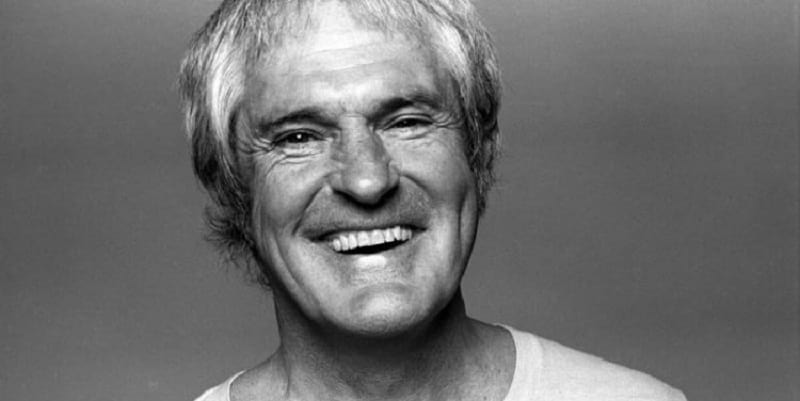
Timothy Leary (1920–1996) was an American psychologist best known for his work on personality, consciousness, and interpersonal behavior. He became widely known through his research on consciousness and his later public role in the debate around psychedelics. He also became a visible and controversial figure in the rise of psychedelic culture in the 1960s. His work and public image still attract attention today. That is mainly because his legacy has always remained divided. On the one hand, the ideas of Timothy Leary helped shape the way people think about behavior, interaction, and the patterns that arise between people. On the other hand, his work also raised lasting questions about ethics, boundaries, and responsibility in psychological research.

In this article, you will discover who Timothy Leary was, what made him influential, and why his name still appears in discussions about behavior, psychology, and culture. You will also read how his work connects to models that are still used today, such as Leary’s Rose. You will also see why his ideas left such a lasting mark on the way people think about interaction and influence. In addition, the article includes well-known quotes, a selection of his books, and a short section on the more controversial parts of his legacy, so the full picture remains visible. Enjoy reading.

Who was Timothy Leary? His biography

After Timothy Leary earned his Bachelor’s degree (BSc.) in psychology from the University of Alabama in 1943, he received his doctorate (Ph.D.) from the University of California, Berkeley in 1950.

In 1954, Timothy Leary began working as a research psychologist at the Kaiser Foundation in Oakland. During this period, he published widely and developed assessment tools, including work linked to personality profiling in correctional settings.

One of the best-known models associated with his work is Leary’s Rose, which explains how behavior influences the response of others. During his time at Kaiser, his ideas about interpersonal behavior and interaction patterns gained broader attention. That growing attention contributed to his move into the academic environment of Harvard, where Timothy Leary continued to develop his ideas.

In the same era, the United States also saw growing public debate about secret government experiments involving LSD, including projects such as MK-Ultra. Leary is mainly associated with his own research, public statements, and advocacy around psychedelics, rather than as a central figure in those CIA programs.

In the early 1960s, Timothy Leary began experimenting with LSD himself and became deeply influenced by the experience. That shift changed the direction of his work and led to growing tension with colleagues at Harvard. He eventually left Harvard in 1963, which marked the end of his conventional academic career.

After that, his life took an increasingly unconventional direction. He wrote more than 27 books and 250 articles and was interviewed more than 100 times. Leary died on May 31, 1996, at his home in Beverly Hills. Timothy Leary was 75 years old. A year earlier, he had announced that he was living with inoperable prostate cancer. In his final period, he spoke openly about death and the wish to face it on his own terms.

Another detail that reinforced his public image was his final wish regarding his ashes. Timothy Leary asked for his cremated remains to be sent into space. That wish was later partly carried out through a commercial space launch, during which a portion of his ashes was sent into orbit.

Criticism and nuance

It remains difficult to assess Leary’s legacy in a single, simple way. For many supporters, personal freedom was at the heart of his message. Timothy Leary deliberately positioned himself outside established academic and social norms. He regularly challenged fixed beliefs, authority, and conventional thinking.

At the same time, he faced strong criticism for the way he publicly promoted psychedelics. His public image was further amplified by a remark widely associated with Richard Nixon. Nixon reportedly referred to Timothy Leary as “the most dangerous man in America,” a phrase that has remained attached to his reputation ever since.

What can Leary still teach us today about behavior and influence in conversations?

Timothy Leary remains especially relevant because of his ideas about behavior between people. That is also the part that still proves useful in conversations, collaboration, feedback, and self-reflection. The underlying idea is simple. Behavior often calls forth a predictable response. The way you speak and position yourself influences how the other person responds. And that reaction determines your next step.

This means you can influence a conversation, even though you cannot fully control the outcome. Even a small visible change in behavior can shift the pattern of interaction. This comes in handy when you need to talk to someone about something difficult, want to give someone feedback, or when tensions are running high.

Within Toolshero, his work is especially relevant through Leary’s Rose. This model makes interaction patterns easier to recognize and discuss. It shows which forms of behavior support cooperation and which ones increase resistance or distance. Once you understand that pattern, it becomes easier to see why conversations stall and how you can help move them forward.

Three applicable lessons from Leary’s work

Timothy Leary’s ideas only become clear when you apply them in everyday life. It’s not about big ideas, but about the little things you do. Those choices make a difference in the moment. Here are three lessons you can apply directly to your work and everyday life.

Lesson 1: Pay attention to what happens each time. Don’t just look at who is doing it.

In many conversations, attention quickly shifts to the other person as the source of the problem. That often leads to a predictable reaction: pushing harder, defending yourself, or withdrawing. As a result, the pattern often becomes stronger instead of weaker. A more useful approach is to focus less on the person and more on the interaction taking place between you. Briefly describe what you see and what effect it has. Then ask a question that creates space for content.

In a meeting, this might look like this. Someone argues with you and you notice that you have a tendency to talk faster and give more arguments. Instead, you summarize what the other person is saying and ask what their main objection is. This often reduces the tension and restores conversation instead of conflict.

Lesson 2: Choose a change that you can clearly see in what a person does

Large behavioral changes often feel too abstract or too difficult to sustain. As a result, change often remains limited to good intentions. Smaller changes are easier to repeat and can still have a clear effect. You make one deliberate choice and show it immediately in your behavior. That makes it easier to notice what response it triggers and what it does to the collaboration.

Suppose you often come up with a solution when you talk to someone. Usually, people mean well, but sometimes it meets with resistance.

A small change is to ask two questions first before coming up with a solution. This gives the other person more space and shows that they matter. This usually encourages people to share more. That creates more space for balance and shared input in the conversation.

Lesson 3: Take a good look at the situation in which the behavior occurs

Behavior never takes place separately from its context. Time, place, and psychological safety strongly influence how people receive and respond to behavior. Even a well meant message can be received poorly when the setting is tense or poorly chosen. You often see this with feedback. If someone feels rushed or notices that people are looking at them, they will usually be quicker to stand up for themselves. That same conversation can become far more constructive when it takes place at a calmer and more suitable moment.

In practice, this means you choose the context more consciously. You take enough time, you start with one sentence in which you clarify your goal and intention, and you use one concrete example. Then you ask how the other person sees it. In this way, you make the conversation predictable and safe enough to really learn and adjust.

Subscribe to
learn more with
Toolshero

Famous quotes by Timothy Leary

  1. “Women who seek to be equal with men lack ambition.”
  2. “The universe is an intelligence test.”
  3. “Science is all metaphor.”
  4. “You’re only as young as the last time you changed your mind.”
  5. “Think for yourself and question authority.”
  6. “Learning how to operate a soul figures to take time.”
  7. “Turn on, Tune in, Drop out.”
  8. “If you don’t like what you’re doing, you can always pick up your needle and move to another groove.”
  9. “Civilization is unbearable, but it is less unbearable at the top.”
  10. “We are dealing with the best-educated generation in history. But they’ve got a brain dressed up with nowhere to go.”
  11. “If you listen to neurologists and psychiatrists, you’d never fall in love.”
  12. “Grow with the flow”
  13. “LSD is a psychedelic drug which occasionally causes psychotic behavior in people who have NOT taken it.”

Books and publications by Timothy Leary

  • 2014. Chaos and Cyber Culture. Ronin Publishing.
  • 2013, 1977. Exo-Psychology: A Manual on the Use of the Human Nervous System According to the Instructions of the Manufacturers. HardPress Publishing.
  • 2004, 1957. Interpersonal diagnosis of personality. New York: Ronald Press.
  • 1999. Turn On, Tune In, Drop Out. Ronin Publishing.
  • 1998. The politics of ecstasy. Ronin Publishing.
  • 1995. The psychedelic experience: A manual based on the Tibetan book of the dead. Citadel Press.
  • 1995. High Priest. Ronin Publishing.
  • 1989. Neuropolitique: A New Vision of Neuropolitics. New Falcon Publications.
  • 1988. Change Your Brain. Ronin Publishing.
  • 1988. Your Brain is God. Ronin Publishing.
  • 1988. The Cyber-punk: The individual as reality pilot. Mississippi Review, 16(2/3), 252-265.
  • 1987. Info-Psychology. New Falcon Publications.
  • 1982. Changing my mind, among others: lifetime writings. Prentice Hall.
  • 1979. The Intelligence Agents. New Falcon Publications.
  • 1968. The religious experience: Its production and interpretation. Journal of Psychedelic Drugs, 1(2), 3-23.
  • 1966. Psychedelic Prayers after the Tao Te Ching. Poets Press.
  • 1958. Interpersonal diagnosis of personality. American Journal of Physical Medicine & Rehabilitation, 37(6), 331.
  • 1955. Changes in psychoneurotic patients with and without psychotherapy. Journal of Consulting Psychology, 19(4), 239.
  • 1955. The theory and measurement methodology of interpersonal communication. Psychiatry, 18(2), 147-161.
  • 1951. The Interpersonal Dimension of Personality. Journal of Personality 20: 143–161.
  • 1950. The social dimensions of personality: groups structure and dynamics. Ph.D. Dissertation.

How to cite this article:
Van Vliet, V. (2012). Timothy Leary. Retrieved [insert date] from Toolshero.com: https://www.toolshero.com/toolsheroes/timothy-leary/

Original publication date: July 21, 2012 | Last update: April 14, 2026

Add a link to this page on your website:
<a href=”https://www.toolshero.com/toolsheroes/timothy-leary/”>Toolshero.com: Timothy Leary</a>

Did you find this article interesting?

Your rating is more than welcome or share this article via Social media!

Average rating 4.2 / 5. Vote count: 10

No votes so far! Be the first to rate this post.

We are sorry that this post was not useful for you!

Let us improve this post!

Tell us how we can improve this post?

Vincent van Vliet
Article by:

Vincent van Vliet

Vincent van Vliet is co-founder and responsible for the content and release management. Together with the team Vincent sets the strategy and manages the content planning, go-to-market, customer experience and corporate development aspects of the company.

Tagged:

Leave a Reply