Paul Hersey biography, quotes and books

Paul Hersey - Toolshero

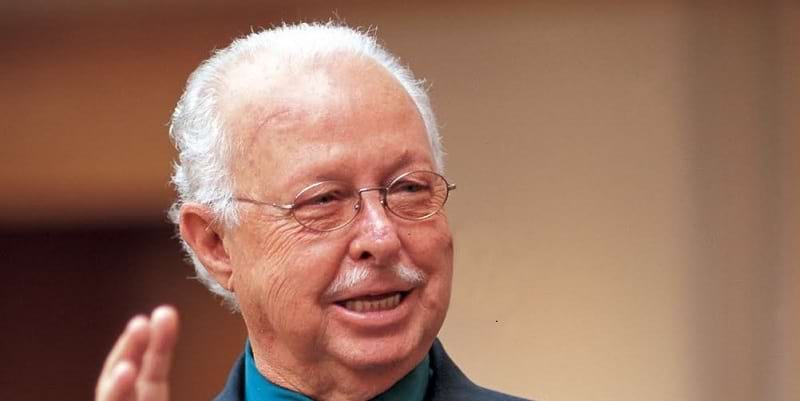
Dr. Paul Hersey (1931-2012) was a well-known educator, entrepreneur, trainer, and consultant in the field of management and leadership. One of the best-known theories in the field of leadership developed by Paul Hersey, together with Ken Blanchard, is the Situational Leadership model. This management approach (and the supporting model) links the effectiveness of leadership to practical (team) situations. More than 14 million managers and professionals worldwide are familiar with or have been trained in the use of this model.

The biography of Paul Hersey

Paul Hersey earned several academic degrees in the 1950s and 1960s. He completed a Bachelor of Science (BS) degree at Seton Hall University, then pursued an MBA at the University of Chicago, and finally earned his Ph.D. from the University of Massachusetts. This mix of organizational behavior, leadership, and practical research clearly formed the basis for his later views on effective leadership.

In 1960, Paul Hersey, together with colleagues Douglas McGregor and Carl Rogers, took an important next step. They founded the Center for Leadership Studies Inc. in Escondido in the United States. This center combined leadership studies, research, and training with coaching and sales training. The organization worked extensively for clients in government, industry, and defense and grew into an influential knowledge and training institute in the field of leadership.

At the same time, Hersey remained active in academia. He was affiliated with several universities, including Nova Southeastern University, the University of California, and the universities of Arkansas and Ohio. In these roles, he brought together three worlds: education, research, and consulting. His lectures were known for their strong link between theory and daily practice and for their emphasis on concrete leadership behavior rather than just abstract models.

Everything came together in the 1960s and 1970s. Based on his academic work and his experiences in organizations, Hersey developed the Situational Leadership model together with Ken Blanchard to develop the Situational Leadership model. What began as a practical framework for training and research grew into one of the most widely used leadership models in the world. The model was incorporated into leadership programs, books, and corporate academies and found its way into organizations in a wide variety of sectors.

In the decades that followed, Paul Hersey remained visible and active as an author, consultant, and speaker. He contributed to new editions of his books, translated his insights into topics such as sales and change management, and remained involved in the development of leadership programs at home and abroad. Until his death in 2012, he was regarded as one of the founders of modern, situational leadership. His life shows a clear trajectory. Time and again, he sought ways to make scientific insights as practical as possible, so that leaders at all levels could become better at managing, coaching, and developing people.

Paul Hersey and the creation of the Situational Leadership Model

Paul Hersey became internationally known for developing the Situational Leadership model, which he designed together with Ken Blanchard. In the 1960s and 1970s, he observed in both research and practice that a single fixed leadership style simply does not work. Employees differ in experience, motivation, and self-confidence, and tasks also vary in complexity. According to Hersey, an effective leader must therefore constantly adapt.

Hersey’s model focuses on two types of behavior: task-oriented behavior and relationship-oriented behavior. Task-oriented behavior is about creating clarity: setting goals, giving instructions, making agreements, and monitoring results. Relationship-oriented behavior is about paying attention to people: listening, motivating, supporting, and thinking together. Combining these two dimensions creates different leadership styles, ranging from strongly directive to more coaching, supportive, or delegating.

Free Toolshero ebook

The strength of the Situational Leadership Model is that it helps managers to look very specifically at an employee’s level of development in relation to a specific task. It is not the position or age that is leading, but the question: how skilled and how motivated is someone in this situation? Based on this, the manager consciously chooses a style that suits that moment. This has made situational leadership a practical compass for managers worldwide, rather than an abstract theory.

The Center for Leadership Studies and global impact

To make his ideas about leadership more widely available, Paul Hersey founded the Center for Leadership Studies (CLS). This organization translated his insights about situational leadership into training programs, certifications, and learning materials for organizations. The original Situational Leadership Model remained at the heart of the approach.

The Center for Leadership Studies worked and continues to work with organizations in a wide range of sectors, from government and non-profit to international companies. Managers at all levels, from team leaders to top management, are trained in analyzing situations, assessing the development level of employees, and choosing appropriate leadership behavior.

As a result, Paul Hersey’s work has become a standard reference in leadership development. Many modern leadership programs, corporate academies, and management training courses still use variations of his model. His ideas are reflected in training courses on coaching, performance management, change management, and even sales. In this way, Hersey has had a lasting influence on how effective leadership is viewed worldwide.

Join the Toolshero community

Famous quotes

  1. “I guess the gift that was given to me was that I can take very complex things and put them into nickel words that everybody can understand.”
  2. “People differ not only in their ability to do but also in their ‘will’ to do'”
  3. “The key to being an effective manager is leadership”
  4. “There seems to be adequate evidence that the number one motivator of people is feedback on results.”
  5. “It is not enough to describe your leadership style or indicate your intentions. A Situational Leader assesses the performance of others and takes the responsibility for making things happen.”

Publications, journals and books by Paul Hersey et al

  • 2014. Situational leadership. Business Contact.
  • 2012, 1977. Management of Organizational Behavior: Utilizing Human Resources. Prentice-Hall.
  • 2011. Classics of Organizational Behaviour. Waveland Press.
  • 2010. Plugged: Dig Out and Get the Right Things Done. Clerisy Press.
  • 2010. The Ethical Executive. Stanford Business Books.
  • 1999. Situational Parenting. Leadership Studies.
  • 1996. Great ideas. Training and Development, 50, 42-7.
  • 1989. Situational leadership in nursing. Norwalk, CT: Appleton & Lange.
  • 1988. Management of organizational behavior.
  • 1988. LEAD questionnaires. Center for Leadership Studies Press, San Diego, CA.
  • 1986, 1977. Organizational change through effective leadership. Prentice-Hall.
  • 1985. Situational Selling: An Approach for Increasing Sales Effectiveness.
  • 1982. Leadership style: Attitudes and behaviors.
  • 1982. Grid® principles and situationalism: Both A response to Blake and Mouton.
  • 1979. Life cycle theory of leadership. Training and Development Journal.
  • 1979. Situational leadership, perception, and the impact of power. Group & Organization Management, 4(4), 418-428.
  • 1978. The Family Game: A situational approach to effective parenting. Addison-Wesley.
  • 1976. Leader effectiveness and adaptability description (LEAD). The 1976 annual handbook for group facilitators, 5, 133-142.
  • 1974. So you want to know your leadership style?. Training & Development Journal.
  • 1974. What’s Missing in MBO. Management Review, 10, 25-32.
  • 1972. The management of change: I. Change and the use of power. Training & Development Journal.
  • 1970. A Leadership Theory for Educational Administrators. Educ, 90(4), 303-10.
  • 1969. Life cycle theory of leadership. Training & Development Journal.

How to cite this article:
Van Vliet, V. (2012). Paul Hersey. Retrieved [insert date] from Toolshero: https://www.toolshero.com/toolsheroes/paul-hersey/

Original publication date: 07/06/2012 | Last update: 12/02/2025

Add a link to this page on your website:
<a href=”https://www.toolshero.com/toolsheroes/paul-hersey/”>Toolshero: Paul Hersey</a>

Did you find this article interesting?

Your rating is more than welcome or share this article via Social media!

Average rating 5 / 5. Vote count: 12

No votes so far! Be the first to rate this post.

We are sorry that this post was not useful for you!

Let us improve this post!

Tell us how we can improve this post?

Vincent van Vliet
Article by:

Vincent van Vliet

Vincent van Vliet is co-founder and responsible for the content and release management. Together with the team Vincent sets the strategy and manages the content planning, go-to-market, customer experience and corporate development aspects of the company.

Tagged:

Leave a Reply