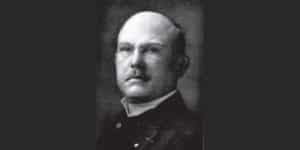
Alexander Osterwalder biography and books

Alexander Osterwalder (1974) is a famous Swiss business scientist, entrepreneur, author and strategy consultant. Most of the people know Alexander Osterwalder from his work on business model development. He is also the founder of the Business Model Canvas theory and the Value Proposition Canvas.
Alexander Osterwalder biography
Education
Alexander Osterwalder graduated in 2000 at the University of Lausanne for his master (MA) in Political Science. In 2004 he got his doctorate (PhD) in Management Information Systems at the University of Lausanne for the doctorate thesis “The Business Model Ontology”.
Before his Master graduation, he had “Netfinance”, a company in online trading and investment, which he started up in 1999. In that time he was also a business journalist for the company Bilanz and fellow researcher at the University of Lausanne. During his PhD research, Alexander Osterwalder did intensive research on business modelling in a practical way; this was very inspiring for him.

This also lead to two new start-ups: BusinessModelDesign.com, which was founded in 2006 and Strategyzer, consultancy services. Both companies still exist today and are very successful.
Business Model Generation
In 2010 Alexander Osterwalder published together with Yves Pigneur, a book called the Business Model Generation. This book is all about learning how to build business models that work, and value propositions that sell. It was co-created with a crowd of 470 practitioners from 45 different countries. The book became a great success by selling more than a million copies in 30 languages.
Famous quotes
- “Once you understand business models you can then start prototyping business models just like you prototype products.”
- “Actions speak louder than words. There is a big difference between what people say and what they do. People might tell you they are excited about your new product, but when they are in a buying situation their behaviour might be totally different.”
- “Great entrepreneurs are often great listeners and they can spot patterns and pick up on small details in customer stories.”
- “Co-creation is much more work than writing somewhere in a hidden corner and then publishing your content. However, the benefits outweigh the costs.”
- “Founders go wrong when they start to believe their business plan will materialize as written. I advise entrepreneurs to burn their business plan – it’s simply too dangerous to the health of your business.”
- “Companies should focus on one of three value disciplines: operational excellence, product leadership, or customer intimacy.”
- “Dream jobs are more often created than found, so they’re rarely attainable through conventional searches. Creating one requires strong self-knowledge.”
- “People are moved more by stories than by logic. Ease listeners into the new or unknown by building the logic of your model into a compelling narrative.”
Books, articles and publications by Alexander Osterwalder et al.
- 2020. The Invincible Company: How to Constantly Reinvent Your Organization with Inspiration From the World’s Best Business Models. John Wiley & Sons.
- 2020. V Entrepreneurship. Module Handbook Modules of Mechanical Engineering for Exchange Students.
- 2019. Testing business ideas: A field guide for rapid experimentation. John Wiley & Sons.
- 2014. Value proposition design: how to create products and services customers want. John Wiley and Sons.
- 2012. Business Model You: A One-Page Method For Reinventing Your Career. John Wiley and Sons Inc.
- 2011. Business Model Generation: A handbook for visionaries, game changers and challengers. African Journal of Business Management, 5(7), 8918-8932.
- 2011. Aligning profit and purpose through business model innovation. Responsible management practices for the 21st century, 61-76.
- 2013. Designing business models and similar strategic objects: the contribution of IS. Journal of the Association for Information Systems, 14(5), 237.
- 2010. Business model generation: a handbook for visionaries, game changers, and challengers. John Wiley and Sons.
- 2007. How to describe and improve your business model to compete better. draft version.
- 2005. Clarifying business models: Origins, present, and future of the concept. Communications of the association for Information Systems, 16(1), 1.
- 2005. Skype’s disruptive potential in the Telecom market: a systematic comparison of business models. University of Lausanne, Information Systems Institute, Lausanne, Working paper.
- 2005. Comparing two business model ontologies for designing e-business models and value constellations. BLED 2005 Proceedings, 15.
- 2004. The business model ontology: A proposition in a design science approach.
- 2004. Understanding ICT based business models in developing countries. International journal of information technology and management, 3(2-4), 333-348.
- 2004. Investigating the Use of the Business Model Concept through Interviews. In ICEB (pp. 568-573).
- 2003. Modeling value propositions in e-Business. In Proceedings of the 5th international conference on Electronic commerce (pp. 429-436). ACM.
- 2003. Towards business and information systems fit through a business model ontology. In Strategic Management Society Conference, Baltimore.
- 2003. Modelling Customer Relationships in e Business Illustrated through the Mobile Industry. BLED 2003 Proceedings, 41.
- 2002. An e Business model ontology for modeling e Business. BLED 2002 Proceedings, 2.
- 2002. E‐business model design, classification, and measurements. Thunderbird International Business Review, 44(1), 5-23.
- 2002. An ontology for developing e-business models. IFIP DsiAge.
- 2002. The Business Model Handbook for Developing Countries. Université de Lausanne, 5.
- 2001. Modeling e-Business with eBML. In 5th Int’l Workshop on the Management of Firms’ Networks (CIMRE’01), Mahdia, Tunisia.
How to cite this article:
van Vliet, V. (2016). Alexander Osterwalder. Retrieved [insert date] from Toolshero: https://www.toolshero.com/toolsheroes/alexander-osterwalder/
Published on: 10/03/2016 | Last update: 04/04/2023
Add a link to this page on your website:
<a href=”https://www.toolshero.com/toolsheroes/alexander-osterwalder/”>Toolshero: Alexander Osterwalder</a>

Vincent van Vliet
Vincent van Vliet is co-founder and responsible for the content and release management. Together with the team Vincent sets the strategy and manages the content planning, go-to-market, customer experience and corporate development aspects of the company.

Related ARTICLES

Crowdsourcing: the meaning, definition and some examples

Value Proposition Canvas Model and Template

Business Plan

Business Model Canvas (BMC) explained including template

Multi Level Marketing (MLM) explained