
Elon Musk biography, net worth and quotes
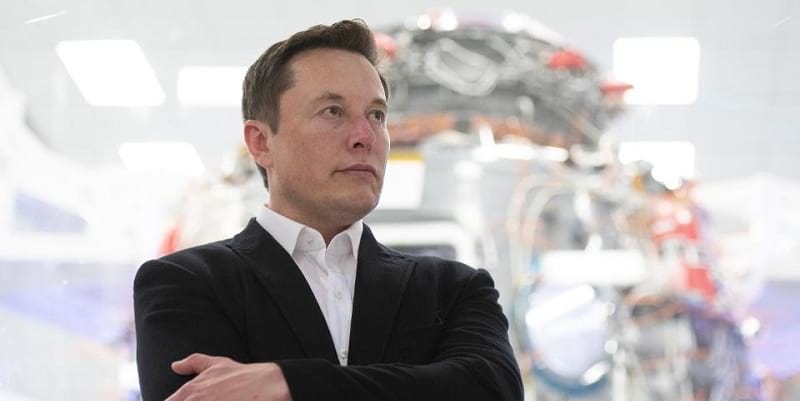
Elon Musk is a South-African-Canadian-American entrepreneur who lives in the United States. He is the founder of SpaceX, Tesla, and Zip2, among others. He was also one of the people responsible for the success of PayPal. Currently, Elon Musk serves as Chief Executive Officer (CEO) and Chief Designer (CDO) of SpaceX, CEO and product architect of Tesla (electric vehicles), and chair of SolarCity.
Who is Elon Musk? His biography
Where was Elon Musk born? Elon Musk was born in Pretoria, South-Africa on 28 June 1971. He’s the son of a Canadian model (Maye Musk) and a South-African electromechanical engineer (Errol Musk). His parents divorced in 1980, after which Musk lived with his father. This was the start of Elon Musk history.
When he was 10 years old, he discovered the Commodore VIC-20. He taught himself to programme and sold a video game coded in BASIC two years later. BASIC is an imperative programming language that was originally intended to help people learn programming very quickly. The game was called Blastar, and he sold it to PC and Office Technology magazine for 500 dollars soon after.

As a child, Musk attended the independent Waterkloof House Preparatory School. He did his final exams at Pretoria Boys High School and moved to Canada in June of 1989. He then became a Canadian citizen through his Canadian mother.
In 1989 Elon Musk was admitted to Queen’s University in Kingston, Ontario. In 1992, after two years at Queen’s University, Musk left for the University of Pennsylvania, where he earned his Bachelor of Science degree in Physics from Penn’s College of Arts and Sciences and his Bachelor of Arts degree in Economics from the Wharton School of the University of Pennsylvania. Musk continued for another year to get his second bachelor.
During his studies at the University of Pennsylvania, Musk and fellow student Adeo Ressi bought a student house to use as a nightclub. In 1995, at the age of 24, Musk moved to California to get his PhD in physics from Stanford University, but left the university after just two days to start his own businesses in the fields of Internet, sustainable energy, and space. He became an American citizen in 2002.
When he’s just twelve years old, he’s already a better programmer than his teachers. At 24 he gave up his studies at Stanford University to start his first business.
Four years later, that business is worth 300 million dollars and is bought by Compaq. In 2002 eBay buys one of his other businesses – PayPal – for the considerable sum of 1.5 billion dollars. He invests his considerable fortune in SpaceX (2002), Tesla Motors (2004), and SolarCity (2006).
Zip2
Musk and his brother Kimbal founded Zip2 in 1995, an internet company. They did so with investments from a group of business angels.
One of the things the company developed was an online city guide for newspapers. Elon Musk approached The New York Times, Wall street journal and the Chicago Tribune. During his time at Zip2, Elon wanted to become CEO of the company, but none of Zip2’s board members agreed. Compaq bought Zip2 for 307 million American dollars, of which 7% went to Musk, amounting to 22 million dollars.
X.com and PayPal
In March of 1999, Musk founded X.com, an online payment platform. He invested 10 million in it.
A year later the company merged with Confinity which had its own payment platform named PayPal. The merged company focused on the services PayPal already had and continued under that name in 2001.
PayPal’s early growth was driven by a promotion that offered money to new customers if they signed up. PayPal was acquired by eBay in October of 2002, for one-and-a-half billion dollars. 165 million of that sum went to Musk. Before the takeover, Musk had been the largest shareholder with 11.7% of PayPal’s shares.
SpaceX
In 2001 Musk came up with the concept ‘Mars Oasis’; a project to have a small, experimental greenhouse with food crops land on Mars to generate public interest in space exploration and setting up an international space station. In October of 2001, Musk, Jim Cantrell, and Adeo Ressi travelled to Moscow to purchase old ICBMs that could shoot things into space with reusable rockets.
In Russia, Musk was received by companies NPO Lavochkin and Kosmotras. However, he was seen as an amateur and was even allegedly spat at by one of the Russian designers of the rocket. In a video circulating on the internet, Musk says that he said he was looking for a rocket, but that they could keep the nuke.
Later, Musk and his team met again with the people behind Kosmotras, after which they were offered the rocket for 8 million US dollars. Musk declined the offer and decided to start his own company with which he would build affordable rockets. With 100 million of his own earnings, he then started SpaceX in 2002 (Space Exploration Technologies Corp.) As of 2021, he remains the CEO of the company and also holds the position of Chief Engineer.
His venture into commercial space travel inspired several Elon Musk quotes.
Tesla
Elon Musk joined Tesla Motors, Inc. in 2004 as chairman and product architect. In 2008 he became CEO of the company. Tesla first built an electric car in 2008, the Tesla Roadster. He would later launch one of the earlier models into space. The electric car was the starting point for a whole series of new models.
His initiative to build electric cars is reflected by an Elon Musk quote about Ford.
One day, Musk thought of the idea of having SEXY in his Tesla portfolio. So he named the following models: Model S, Model 3, Model X and Model Y (S3XY). He could not name the second in the series Model E because Ford has registered this trade name.
Self-landing rockets
With SpaceX, Musk launched the first Falcon 1 rocket in 2006. The rocket did not make it to orbit, but despite this, the company was awarded a contract by NASA (Commercial Orbital Transportation Services).
SpaceX failed twice more, causing Musk so much stress that he reported physical pain and woke up screaming from nightmares.
In 2008, Musk succeeded in launching the Falcon 1 rocket and putting it into orbit. This made SpaceX the first commercial company to do so.
In the same year, SpaceX received a new contract from NASA, called the Commercial Resupply Services contract, for a total of 12 flights with the Falcon 9 rocket in combination with the Dragon spacecraft to the International Space Station (ISS).
In 2012, the time had come. SpaceX’s Dragon capsule docked at the ISS, a true first for commercial spaceflight. The organisation’s goal was still to develop reusable rockets and capsules. The first stage of the Falcon Heavy rocket had successfully landed. Subsequent launches even landed the rocket on a self-propelled ship, just off the coast.
The Boring Company
The good ideas keep coming from Elon Musk. His many business initiatives and the risks he takes in business are reflected by several Elon Musk quotes.
In 2006, he started The Boring Company, aimed at building a tunnel network under cities to relieve the heavy traffic. In early 2017, the company started building a test trench on SpaceX’s premises. In 2021, a tunnel under the Las Vegas Convention Centre was completed. Local government authorities have since approved the tunnel system.
In 2018, Musk produced and sold flamethrowers for the company, inspired by the movie Spaceballs, directed by Mel Brooks.
Tesla Roadster in space
In 2018, Elon Musk launched the Falcon Heavy containing Musk’s personal Tesla Roadster. On the screen in the cockpit is a message for aliens who might enter the vehicle in the future: don’t panic!
In 2017, SpaceX unveiled the Starship. A year later, SpaceX announced it planned a trip to the moon in 2023. In 2020, the company performed its first manned flight, making them the first commercial company to put a person into orbit.
Tesla Roadster in space
In 2018, Elon Musk launched the Falcon Heavy containing Musk’s personal Tesla Roadster. On the screen in the cockpit is a message for aliens who might enter the vehicle in the future: don’t panic!
In 2017, SpaceX unveiled the Starship. A year later, SpaceX announced it planned a trip to the moon in 2023. In 2020, the company performed its first manned flight, making them the first commercial company to put a person into orbit.
Starlink satellites
In 2015, SpaceX began developing the Starlink satellites that were put into low Earth orbit. The constellation of satellites would be shot into space in phases and the whole project would take around 10 years and cost $10 billion.
SpaceX has faced a lot of criticism from astronomers who say that this satellite constellation will cause danger in space. Musk firmly rejects the criticism and states that the impact of the satellites is zero.
Crypto
Elon Musk is very optimistic when it comes to crypto currencies, especially about Dogecoin. The founder of Tesla and SpaceX tweeted several times about this digital currency, which he himself calls the people’s coin.
In a statement, he explains that many people around him have bought Dogecoin and that he therefore also supports this token. He feels that this is the crypto currency of the general public.
Musk acknowledges that he has invested in Bitcoin, Ethereum and Dogecoin.
Elon Musk wife and children (spouse)
It is clear that Elon Musk is a busy man. Besides his businesses, he also has six children to look after.
In 2020, Musk had a son with his then girlfriend Grimes. Before that, he had five other children with his ex-wife Justine Wilson. His first child with Justine died of cot death. Nevada Alexander Musk was only 10 weeks old.
Little is known about most of his children. The name of his last child was the subject of much debate. He and partner Grimes named the child XÆ A-Xii. In a podcast with Joe Rogan, Musk revealed the way the name is pronounced: X-Ash-A-Twelve.
Between 2010 and 2015, Musk was married to Talulah Riley.
Elon Musk net worth
A large part of Elon Musk’s net worth comes from the shares he owns in Tesla and SpaceX. On 8 December 2021, he was officially the richest man in the world, with an estimated net worth of $278 billion. Musk is ahead of Amazon founder Jeff Bezos and billionaires Bill Gates and Larry Page on the list of the world’s richest people.
Time magazine declared Elon Musk person of the year 2021.

Elon Musk quotes
- “When something is important enough, you do it even if the odds are not in your favor.”
- “If you get up in the morning and think the future is going to be better, it is a bright day. Otherwise, it’s not.”
- “There have to be reasons that you get up in the morning and you want to live. Why do you want to live? What’s the point? What inspires you? What do you love about the future? If the future does not include being out there among the stars and being a multi-planet species, I find that incredibly depressing.”
- “When Henry Ford made cheap, reliable cars, people said, ‘Nah, what’s wrong with a horse?’ That was a huge bet he made, and it worked.”
- “Persistence is very important. You should not give up unless you are forced to give up.”
- “It’s OK to have your eggs in one basket as long as you control what happens to that basket.”
- “Failure is an option here. If things are not failing, you are not innovating enough.”
- “Brand is just a perception, and perception will match reality over time. Sometimes it will be ahead, other times it will be behind. But brand is simply a collective impression some have about a product.”
- “Starting and growing a business is as much about the innovation, drive and determination of the people who do it as it is about the product they sell.”
- “We’re going to make it happen. As God is my bloody witness, I’m hell-bent on making it work.”
- “The first step is to establish that something is possible; then probability will occur.”
- “People work better when they know what the goal is and why. It is important that people look forward to coming to work in the morning and enjoy working.”
- “I could either watch it happen or be a part of it.”
Publications and Books of Elon Musk
- 2018. Making life multi-planetary. New Space, 6(1), 2-11.
- 2017. Making humans a multi-planetary species. New Space, 5(2), 46-61.
- 2006. The secret Tesla Motors master plan (just between you and me). blog), August, 2.
- 2001. U.S. Patent No. 6,185,194. Washington, DC: U.S. Patent and Trademark Office.
- 1999. U.S. Patent No. 5,944,769. Washington, DC: U.S. Patent and Trademark Office.
How to cite this article:
Sari, J. (2019). Elon Musk. Retrieved [insert date] from Toolshero: https://www.toolshero.com/toolsheroes/elon-musk/
Published on: 02/07/2019 | Last update: 12/13/2023
Add a link to this page on your website:
<a href=”https://www.toolshero.com/toolsheroes/elon-musk/”>Toolshero: Elon Musk</a>
Jessie Sari
Jessie Sari is a content writer at ToolsHero. Jessie studies Trade Management in Asia at the Hogeschool van Rotterdam. As part of her education, she focuses on building fundamental skills, including marketing, importing and exporting products and services in Asia, economy, finance, management, consultancy and project management.
Related ARTICLES
Simon Sinek biography, quotes and books
Zig Ziglar biography, motivational quotes and books
Artificial Intelligence (AI) explained




One response to “Elon Musk biography, net worth and quotes”
Great article